Prominent Northern Governor Names Region to Produce Next President After Tinubu, “We’re Not Scared”
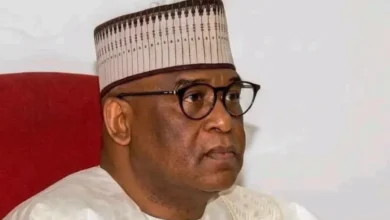
Borno Governor Babagana Zulum says power will return to the North after Tinubu's second term

By Elizabeth
September 14, 2026
A prominent Northern governor has publicly declared that the presidency will return to the North after President Bola Tinubu completes his second term in office, sparking fresh conversations about Nigeria’s power rotation arrangement and the political future of the country’s northern region.
Borno State Governor Babagana Zulum made the statement on Sunday, September 13, 2026, in Kaduna, during an engagement meeting with Northern Nigerian women Ulama and Islamic scholars. The gathering brought together religious leaders and community stakeholders from across the 19 northern states to discuss politics, security, and the role of women in building peace ahead of the 2027 general elections .
What Exactly Did Zulum Say?
Zulum disclosed that Northern leaders had reached a political agreement to support President Tinubu’s reelection in 2027, based on the understanding that power would subsequently return to the North. He described the arrangement as necessary for promoting unity and sustaining peaceful relations between the two regions.
“About five years ago, we decided to ensure unity in Northern Nigeria, and we have achieved our objective,” Zulum said .
The governor explained that the North had played a significant role in Tinubu’s emergence as president in 2023 and stressed that the political understanding between the North and South must be maintained. He said Northern leaders were bound by commitments made to their Southern counterparts regarding the rotation of political power.
“We have negotiated with our Southern brothers and sisters and we have made a commitment. We should allow the South to complete its tenure and then we will decide our political future,” he stated .
Zulum emphasized that his position was not born out of fear or pressure from anyone. “I speak from the heart, not out of fear of anyone, but in the name of God,” he said .
“We Are Not Scared”
The governor’s declaration that the North is “not scared” to wait for its turn reflects a calculated political strategy rather than a sign of weakness. By publicly committing to support Tinubu’s second term, Zulum is positioning the North as a reliable partner in Nigeria’s power-sharing arrangement — one that expects reciprocity when the time comes.
He recalled that Northern leaders had previously benefited from political power and had since negotiated a framework of mutual support with the South. The arrangement, he argued, was necessary for promoting unity and sustaining peaceful relations between the two regions .
Zulum also used the occasion to urge Nigerians to exercise patience with the Tinubu administration as it works to tackle insecurity, poverty, and other pressing challenges facing the country. He said discussions among Northern elites had covered security, out-of-school children, and poverty, and that significant decisions had been reached to improve the welfare of people in the region .
The Role of Women Ulama
The Kaduna meeting was not just about politics. It also focused on the critical role women play in promoting peace and unity across Nigeria. Zulum called on the women Ulama to use their influence to promote peace and unity in their communities, noting that women account for an estimated 60 to 65 percent of votes cast in Borno State .
“Women should be given the opportunity to nurture their children so they can live in peace,” he said. “Whenever God tests us with a trial, patience is necessary before relief comes” .
He urged the women to take the messages from the meeting back to their respective states and communities, stressing that peace remained the major desire of people in Northern Nigeria.
The engagement was part of a broader mobilization effort by Northern governors. Governor Inuwa Yahaya of Gombe State, who chairs the Northern States Governors’ Forum, also addressed the gathering and urged the women Ulama to support President Tinubu’s re-election bid in 2027. He said the meeting provided an opportunity to engage the women Islamic scholars and mobilize them towards ensuring Tinubu’s return to office .
Governor Uba Sani of Kaduna State, who hosted the event, said the women Ulama were gathered to express their support for Tinubu based on his achievements in education, infrastructure, healthcare, agriculture, and security. He said the women represented millions of followers across the 19 northern states and could influence grassroots mobilization .
Not the First Time
Zulum’s position aligns with comments previously made by other senior Northern politicians, suggesting a coordinated strategy among Northern political elites.
Former APC National Chairman Abdullahi Ganduje had said in February 2025 that the presidency would return to the North after Tinubu completes his eight-year tenure. Niger State Governor Mohammed Umaru Bago also said in September 2025 that Northerners should wait until 2031 before seeking the presidency .
Ganduje, speaking in January 2026, dismissed claims that the North would turn its back on Tinubu in 2027, describing such assumptions as misguided. More recently, in July 2026, Ganduje declared that Northern Nigeria would not deliver enough votes to former Vice President Atiku Abubakar or NDC presidential candidate Peter Obi to defeat President Tinubu in 2027. He argued that both opposition figures lack the grassroots political structures required to mount a successful challenge in the region .
“The North is strategic in every presidential election in Nigeria. With due respect to our friends in the opposition, neither Peter Obi nor Atiku Abubakar can mobilise sufficient support in this region to defeat President Tinubu in 2027,” Ganduje said .
The Broader Political Context
Zulum’s statement comes amid ongoing debates about Nigeria’s informal power rotation arrangement between the North and South. While not constitutionally mandated, this understanding has been a key feature of Nigerian politics since the return to democracy in 1999.
The arrangement typically sees power alternate between Northern and Southern regions after two terms of eight years. President Tinubu, a Southerner, is expected to serve until 2031 if reelected in 2027.
However, the issue remains contentious. Former Vice President Atiku Abubakar’s camp has argued that opposition parties should not blindly zone their 2027 presidential ticket to the South, noting that no incumbent president has ever been defeated by an opposition challenger from the same geopolitical bloc .
“At the core of the question is: how does a Southern opposition candidate realistically unseat a sitting Southern president?” the statement from Atiku’s camp read. “Nigerian political history offers no precedent for such an outcome. To insist otherwise is to enter the contest already defeated” .
Atiku’s camp also argued that by 2027, the South would have held presidential power for 18 years, compared to just 10 years for the North. “It becomes difficult to understand the justice in an argument that seeks to deepen an already existing imbalance under the guise of equity,” the statement added .
Meanwhile, the Nigeria Democratic Congress (NDC) has already zoned its presidential ticket to the Southern region for a single four-year term, clearing the way for aspirants like former Anambra Governor Peter Obi. The party resolved that after the completion of the single four-year tenure, the presidential ticket would automatically return to Northern Nigeria in 2031 .
Kwankwaso, the NDC vice-presidential candidate, confirmed in July 2026 that Peter Obi signed a written agreement with him to serve only a single tenure of four years and allow power to return to the North if elected president in 2027 .
“The agreement is what you said, that for four years, we will work together, team together as a group, party, friends and brothers so that after his term of four years (2027-2031), it comes back to the North. That is the general agreement,” Kwankwaso said .
What This Means
Zulum’s declaration serves multiple purposes. It reaffirms the North’s commitment to the existing power-sharing understanding, signals that the region expects to reclaim the presidency in 2031, and positions the governor as a key voice in Northern political calculations.
For now, the focus remains on 2027. Zulum urged Nigerians to exercise patience with the Tinubu administration as it tackles insecurity, poverty, and other pressing challenges facing the country. He also called on women Ulama to use their influence to promote peace and unity in their communities .
The governor expressed optimism that justice would prevail and urged Nigerians to work together to address areas requiring improvement. He commended the organizers for convening the women Ulama meeting, describing it as important for strengthening peace and unity, and urged participants to replicate similar engagements in their states .
As the 2027 general election approaches, the debate over power rotation is likely to intensify. With Northern governors publicly committing to Tinubu’s re-election and opposition parties strategizing their own paths to power, the political landscape is shaping up for what could be one of Nigeria’s most consequential elections in recent memory.